Real World Guide to Teams Premium vs Copilot

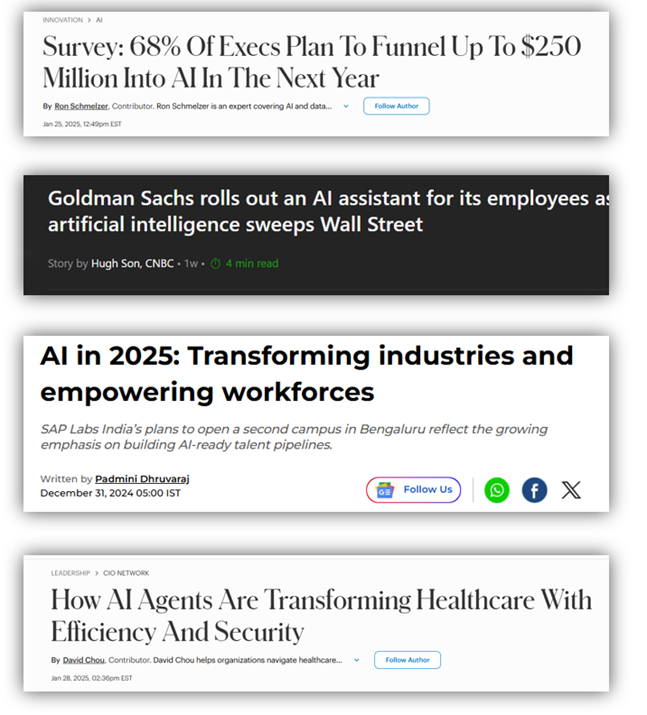
Many organizations are investing heavily in AI-powered solutions, with Fortune 500 companies...


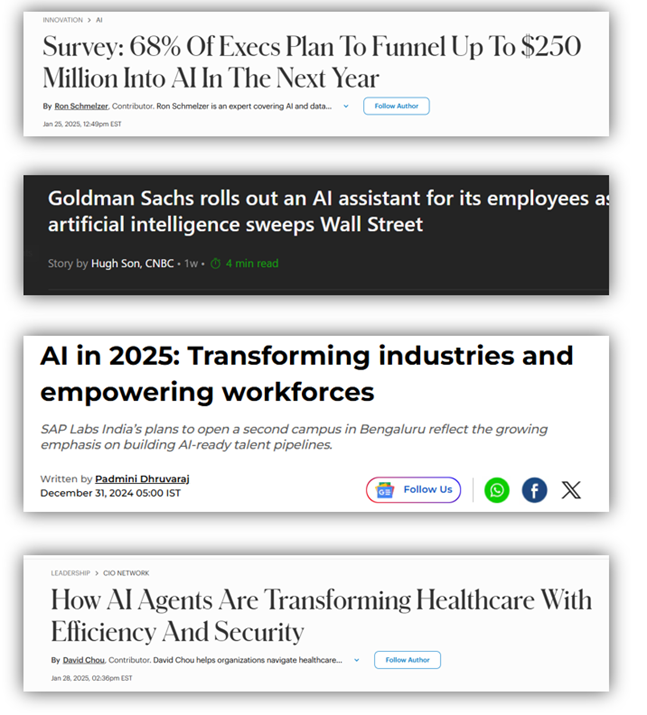
AI isn’t quite where we thought it would be.
In this new blog series, we’ll explore the real-world state of AI; how organizations are planning, piloting, deploying, managing, securing, and adopting AI tools like Microsoft Copilot. We’ll break down what’s working, what’s not, and how to ensure your AI investment delivers measurable value.
A series from AI reality → tool clarity → execution → optimization
Reality check: What’s actually happening with AI in enterprises (you are here)
Tool clarity: Understanding Copilot vs ChatGPT vs Teams Premium
Execution: How to roll out Copilot successfully and prove ROI
Optimization: Choosing the right AI mix (Teams Premium vs Copilot) to scale value
For this first post, I want to set the stage. Over the past six months, customer priorities around AI have shifted dramatically. Let’s start with a simple definition of AI from my perspective:
AI is a tool that enables employees to focus on the skills they were hired for by automating and executing time-consuming or repetitive tasks.
It’s not magic. It’s not a silver bullet. It’s a productivity multiplier when implemented correctly.
Across industries, organizations are focusing AI investments in four main areas:
Now, here’s the reality: the average Fortune 500 company with 10,000 employees spends roughly $3.6 million per year on AI tools like Microsoft Copilot. That’s a major investment. To justify it, most executives expect $5–9 million in return, and if they don’t see it, AI budgets get scrutinized fast.
As organizations move from AI experimentation to real adoption, confusion around which AI tools to deploy becomes a major roadblock—especially when comparing Microsoft Copilot, ChatGPT, and other AI experiences.
What do I mean? Let's look at the changes in priorities around AI this year alone. Between January and July 2025, global policies and economic uncertainty seemed to have triggered a major pivot in AI strategy.
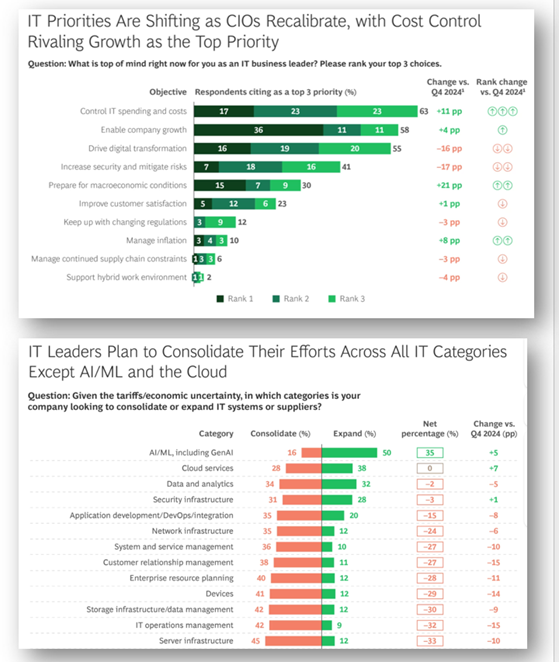
The focus has shifted from “grow at all costs” to“make AI pay for itself.”
As a result of these shifts, we’re seeing CEOs concentrating on four high-impact areas to maximize AI ROI:
1. Strategic integration of Generative AI.
2. Enhanced utilization and optimization of existing technologies.
3. Deeper focus on practical value.
4. Increase use of customer-facing AI.
From January 2024 to March 2025, one in three organizations paused or abandoned their AI rollouts. The primary reason? They skipped a critical step in AI readiness: data cleanup.
Rolling out an AI tool like Microsoft Copilot without first cleaning, organizing, and archiving outdated data almost guarantees poor results. When your AI relies on outdated, inaccurate, or irrelevant information, users will quickly lose trust in its responses. Bad or outdated answers lead to low adoption, and in many cases, complete abandonment of the tool.
In future articles, we’ll dive deeper into how to prepare your data for AI success. For now, remember: every organization should be actively maintaining a data housekeeping cycle to keep AI outputs accurate, relevant, and reliable.
.png?width=2176&height=1632&name=Data%20Housekeeping%20Cycle%20(1).png)
Over the next few blogs, we’ll take a closer look at each stage of a successful Copilot rollout: plan, pilot, deploy, manage, secure, and adopt. Along the way, I’ll share:
I also want to hear from you! What’s worked in your AI journey? What hasn’t? Share your lessons learned, and I may feature them in a future post.
Want to learn more? You can attend my sessions and meet with me at the following conferences:
-Stephen
Instead of leaving employees to "figure it out" or relying on outdated, generic training, ENow gives you actionable insights into real adoption and usage trends across your tenant. Identify gaps in digital literacy, understand how teams are truly working, and design evidence-based adoption programs that drive measurable behavior change. With True Adoption Center, you’ll gain the clarity and data you need to maximize Microsoft 365 and Copilot ROI, turning technology investments into real productivity gains. Discover how ENow can help you take control of adoption today.

Up Next
Understanding AI adoption is only the first step. The next challenge is knowing which AI tools belong where—and which ones introduce risk, redundancy, or wasted spend. Learn more about Copilot vs. ChatGPT vs. Copilot Chat—what’s the difference, what’s governed, and what’s right for your business?



Gartner’s research reveals a persistent “AI intention gap.” Each year from 2019 to 2024, roughly ...