Exchange Center
ENow Software's Exchange blog built by Microsoft MVPs for IT/Sys Admins.
Posts about:
Microsoft Exchange (12)
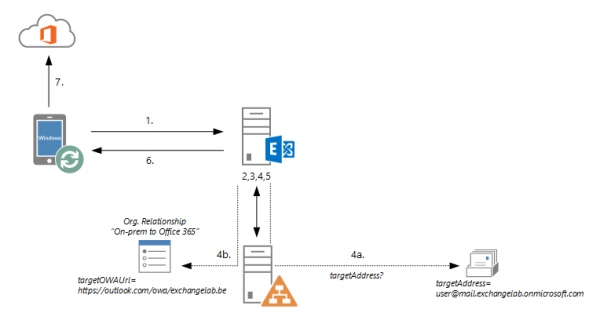
A Closer Look at the New ActiveSync Redirection Feature in Exchange 2013 CU8
Michael Van Horenbeeck MVP, MCSM
On March 17th, Microsoft released Cumulative Update 8 for Exchange Server 2013. By now, we're all used to the idea that cumulative updates and not only Service Packs have also become a vehicle to introduce new features into Exchange. Hence, it is no surprise that CU8 comes with a bunch of new features and improvements alongside a myriad of bug fixes.
Tracking Down Overactive Mailboxes with Get-StoreUsageStatistics
Andrew Higginbotham
Overview
Often times I’ll find myself writing a blog post because the topic recently became relevant due to customer need. Other times I spend hours banging my head against the keyboard trying to resolve an issue and would like to keep others from going through the same ordeal.
In this particular case, I found myself thinking of this fall’s release of Apple iOS 8 & some of the traditional unexpected consequences that arose when used to connect to Exchange via ActiveSync.
Improve Your Exchange Deployment by Learning from a Massive Scale
Tony Redmond MVP
Exchange Online running on Microsoft’s Office 365 cloud platform operates more than 100,000 servers to support some 60 million mailboxes. At least, that’s the best-guess estimate based on information provided by Microsoft at the Exchange Conference 2014, data in their most recent financial reports, and consultant analysis.
The Future of the Exchange Administrator
Tony Redmond MVP
Anyone who runs an on-premises Exchange environment today would be forgiven for wondering how long their job will last, at least in its current shape. The sales pressure from Microsoft and other vendors to influence CIOs to consider moving workloads to cloud platforms increases all the time and the inevitable fear is that jobs disappear once work is transitioned.
Outlook Calendaring: Best Practices and Key Considerations
Theresa Miller
For as long as Microsoft Exchange has existed, Outlook meeting corruption has been a consideration for those who rely on calendaring. Meeting corruption can appear in many forms. However, meeting corruption typically occurs when meetings disappear, when duplicate meetings appear or through other unusual anomalies that users may experience with an appointment.
Scripting Agent Cmdlet Extension
Tracy Lwi
Exchange 2010 recently introduced a new feature called "cmdlet extension agents." These agents can be called when a cmdlet is running, and can also perform extra tasks as a part of the original cmdlet. A recent Microsoft article has great information on understanding the Cmdlet Extension Agents. You can see which cmdlet extension agents are available by running this command in the Exchange Management Console (EMC):
Exchange 2013 on Windows Server 2012: Multi IP addresses, a single NIC
Dominik Hoefling MVP
Many people want to use multiple IP addresses on a single NIC interface with Exchange 2013 and Windows Server 2012. There are several reasons for this multi-homed IP configuration, such as various receive connectors for diverse applications (fax, SharePoint, gateways, etc.), or for an additional IIS website, amongst other things.
Clearing AutoComplete and Other Recipient Caches
Michel de Rooij
Anyone who has participated in migrations or transitions to Exchange has most likely encountered or has had to work around potential issues caused by the nickname cache. A “cache,” also known by its file extension, NK2 in older Outlook clients, is a convenience feature in Outlook and Outlook WebApp (OWA) which lets users pick recipients from a list of frequently-used recipients. This list is displayed when the end user types in the first few letters.
Exchange 2010 3rd Party SSL Certificates: The Whole Story
Theresa Miller
Eventually all good things come to an end and that’s no exception to our 3rd party certificates that allow access to Outlook Web App and other web-based Exchange workloads such as Active Sync or Outlook. This article provides a step by step process on how to update your Exchange 2010 certificates from start to finish. This article also assumes we are using a DigiCert wildcard certificate. Most of this work can be pre-staged before the actual implementation and is highlighted below. With that, let’s begin!